Record Fragment: The Sound of a Neighborhood
Summer intern Camron Baldwin worked on creating object biographies of some of the items we excavated from the CEC site in 2023. We will post some of his work here, and eventually they will populate a Digital Archive that will allow you to explore the collection on your own. For now, enjoy this sneak peak of how effective storytelling can be when we combine archaeological materials with scholarly research and oral histories.
Object: Record Fragment
Material: Vinyl
Date: Mid-20th century (c. 1950–1970)
This broken fragment of a vinyl record was recovered during Heritage West’s 2023 excavation. Whatever label the record originally had has been lost. We can see that “5-1A” has been pressed onto one side of the record, signifying that it was a first-pressed A-side. We don’t know whose hands put this record on a turntable, what room it was played in, or who gathered around to listen.
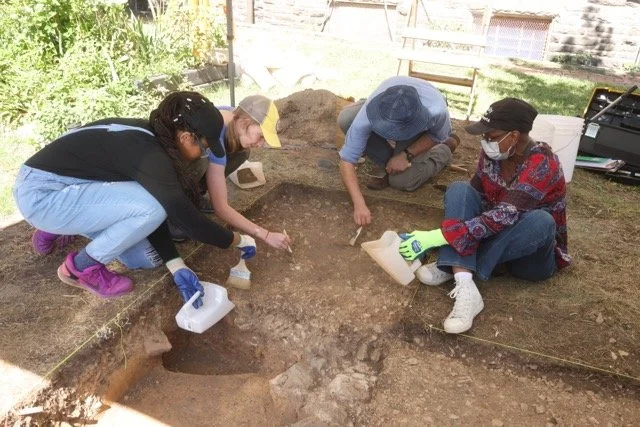
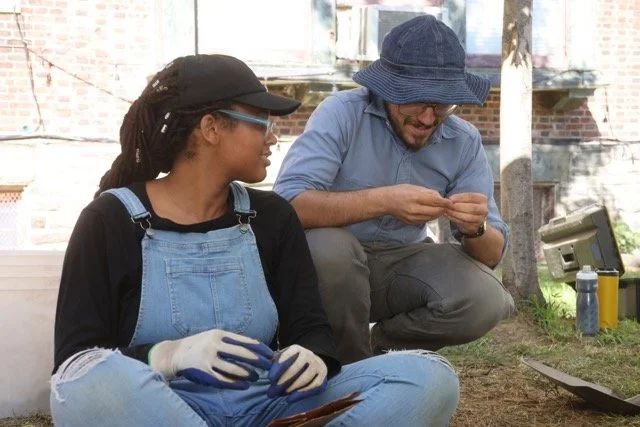
The photographs above were taken at the excavation site right when this record fragment was found in September 2023. Left: Penn students Lauren and Sydney work with Graduate Student Chris and Community Archaeologist Frances. Right: Chris and Lauren examine the record fragment right after it was excavated.
Objects don’t need to be complete to tell us a story. From this record fragment and oral histories with Black Bottom community members, we know that music filled homes, streets, and churches in the neighborhood.
When Renee McBride talks about growing up in West Philadelphia, she often circles back to music. She remembers visiting her great-grandmother’s house on 35th and Wallace. The house itself had dark rooms, imposing, Victorian architecture, and—perhaps eeriest of all—a player piano. “I was five years old, somewhere around there, and I could always hear sometimes the piano going and there was nobody sitting there,” she said. “Quite frightening for a five-year-old, right?”
Her experience of music was inseparable from her great-grandmother and her community. Amidst the social and political changes of the late 20th century, though, music also became a reflection of generational divides. McBride laughed when she remembered records her parents disapproved of. The teenagers of West Philadelphia saw music as representing something new. Artists like James Brown and Jimi Hendrix became symbols of freedom, power, and identity within the community and the nation at large. “He broke a couple of records over his knees,” McBride said, recalling when her father destroyed a Jimi Hendrix record she had brought home.
But music in West Philadelphia was more than what played on the turntable (or what was broken before it could be). Numerous Jazz Clubs also dotted the neighborhood—and the entire city. Iconic venues remembered by the community include Club Zel-mar and Club Harlem, where community members gathered to hear talent that had come from all over the world. Songs drifted from clubs to turntables to churches to streets to porches to radios, helping create the sense of community former Black Bottom residents remember so fondly.
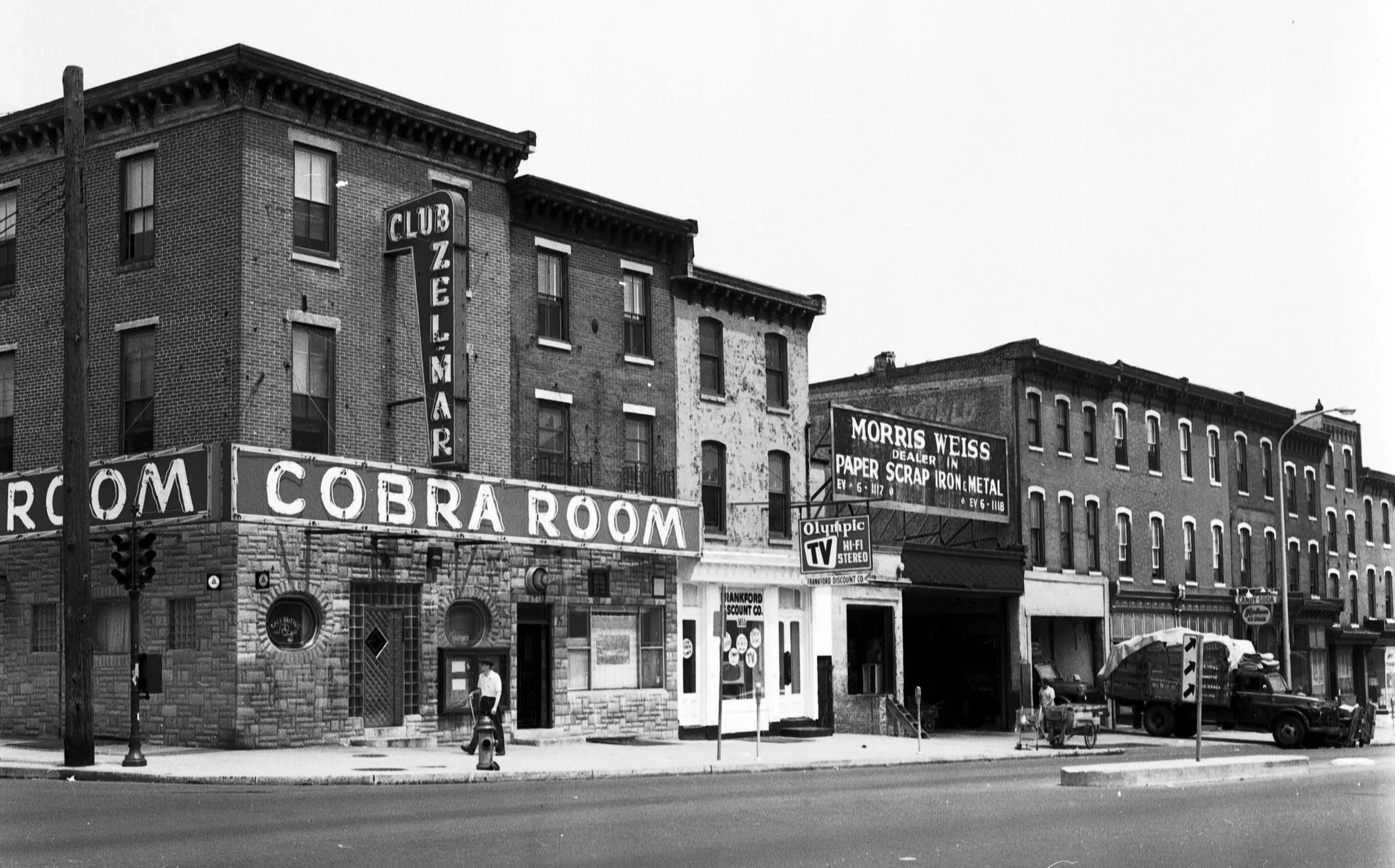
Club Zelmar was located on the Northeast corner of 37th & Market Streets in this image from the Fall of 1960. Image Source: The University of Pennsylvania Archives.
“It was still the village,” McBride recalled, and music was a staple of it—it still is, even long after the neighborhood’s destruction. On top of remembering her great-grandmother’s player piano, she proudly identifies herself as the mother of Christian McBride, a jazz bassist from West Philadelphia who carries on the musical tradition his mother describes. Her memories trace more than a century of West Philadelphia’s musical legacy, revealing the ways it still resonates in the neighborhood’s descendants.
Through just a fragment of a record, we see an ecosystem of music that helped residents celebrate, worship, argue, organize, and express themselves. Like the Black Bottom, the record survives fragmented, yet still carrying traces of the life of the neighborhood and its descendants scattered across the city. Archaeology cannot recover the songs the record played, but we can still hear their echoes.
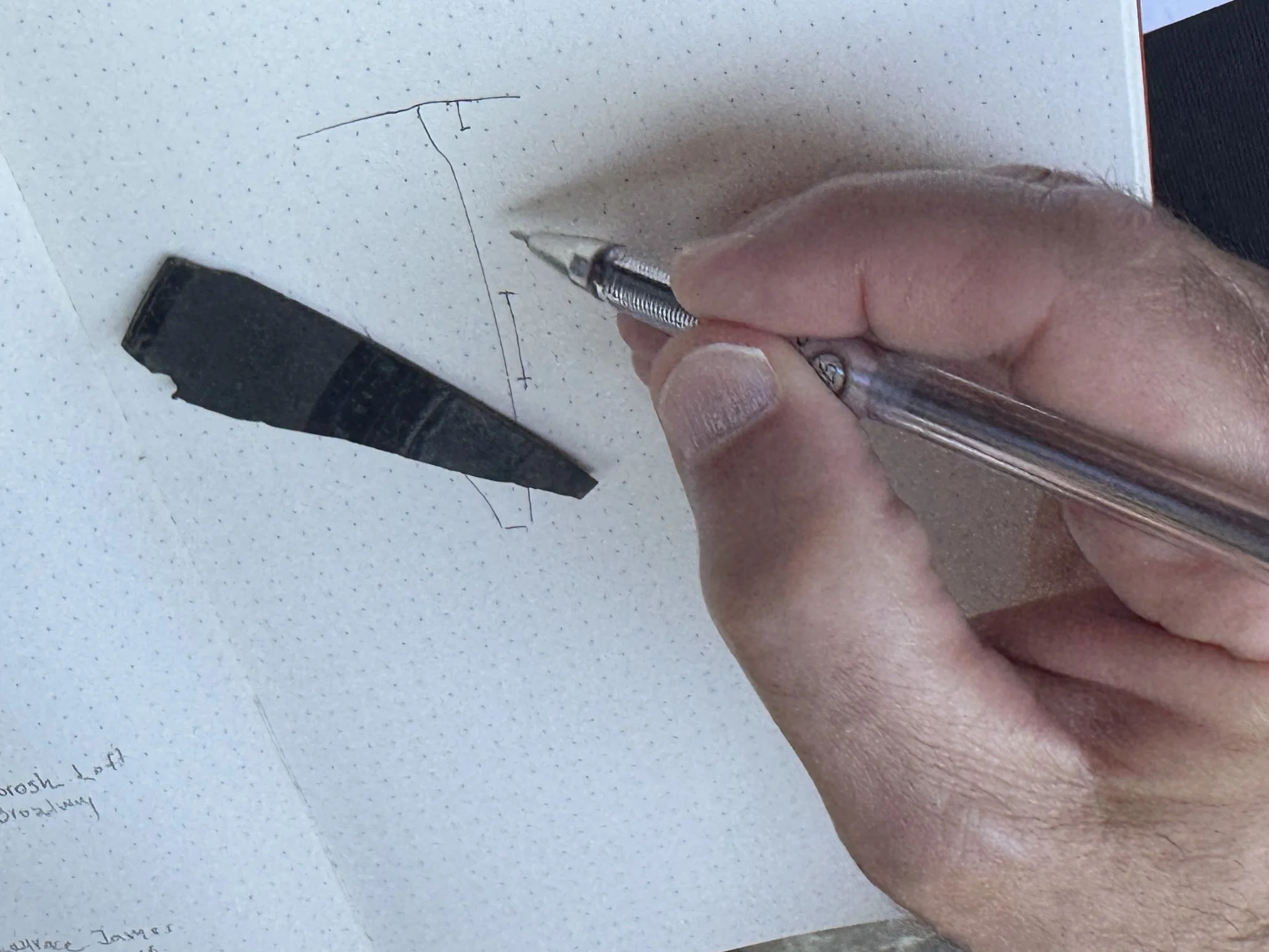
A music expert who visited a public event at the Penn Museum in June 2026 took measurements on the record fragment to help us potentially identify it.