Food in the Black Bottom: Evidence from the CEC Site
What were people in the historic Black Bottom community eating? One way we can find out is by looking at preserved food remains uncovered from our excavations at the Community Education Center Site. As archaeologists, we look at both animal bones and plant remains to answer this question – but in this post by Graduate Assistant Moriah McKenna, we’re focusing on the plants that she and Dr. Ally Mitchem Hansen have been analyzing.
First, where might we think of looking for these food remains? Perhaps an old kitchen floor or inside a preserved pantry? Well, as is always the case with archaeology, we have to work with what we find, and at the CEC, it was an old toilet—otherwise called a privy. What comes in must go out as they say, and thus some of the plant remains in this context may have gone through the human body first… though we also know that a lot of other garbage was tossed in the privy as well. There was no municipal trash pickup in Philadelphia until 1922, which means that for much of the history of the houses we were investigating in what is now the parking lot of the CEC, people needed to dispose of their own trash. Much of this trash, especially smelly kitchen trash, likely ended up in a privy like the one we excavated.
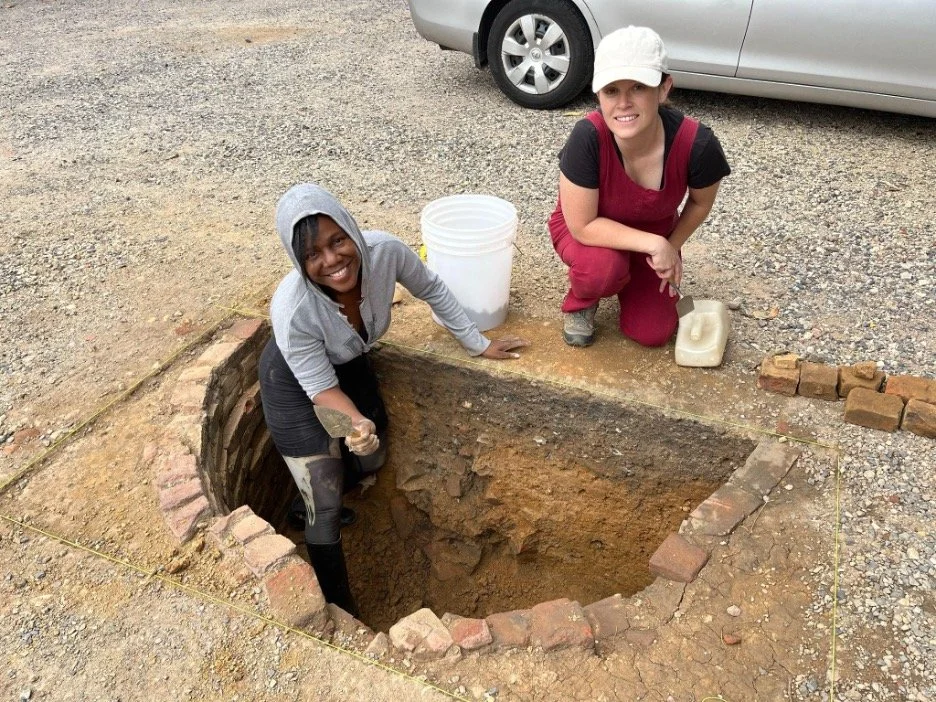
Excavation of the privy during the 2023 field season at the CEC Site by community member (left) and Heritage West director, Dr. Sarah Linn (right).
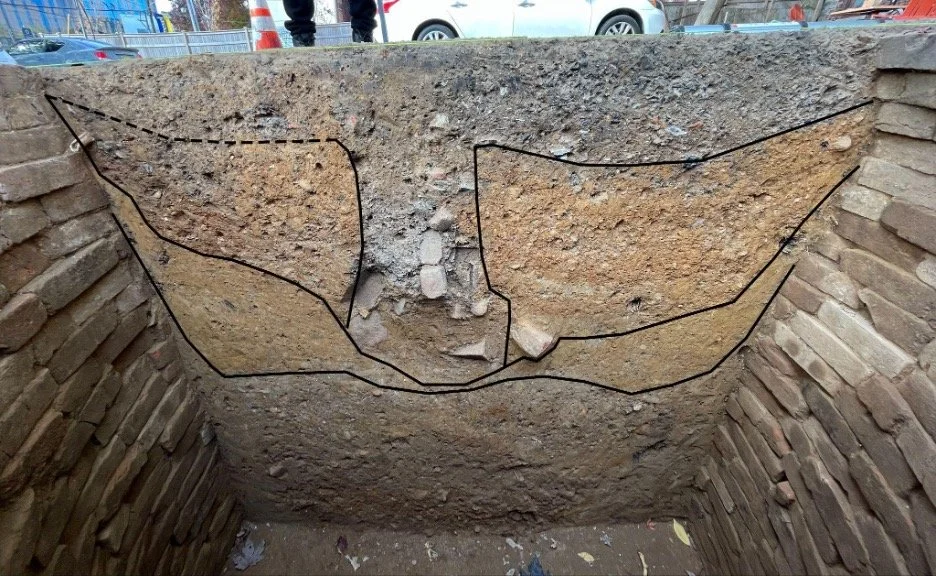
Profile wall of the privy at the end of excavations. Black lines have been drawn to outline the stratigraphy—or layers of soil and artifacts—that we were able to identify.
Above, you can see the layers of deposits we found once we excavated the privy. In archaeology, we assume the deeper the layers, the older they are. It is clear the privy was dug out for cleaning a couple of times (which is just you see the sloping lines towards the middle of profile), but the layered deposits on the edges of the excavation along the brick lining of the privy remain intact.
To recover preserved plant remains from the soil in the privy, we take a sample from each layer and put it in a large tub of water so the lighter plant remains float to the top and we can easily scoop them up. This process is called flotation. Community members helped with sample flotation during one of our workshops after the excavation season was over. Most often, we are recovering seeds or seed parts that can be identified down to species level by archaeobotanists.
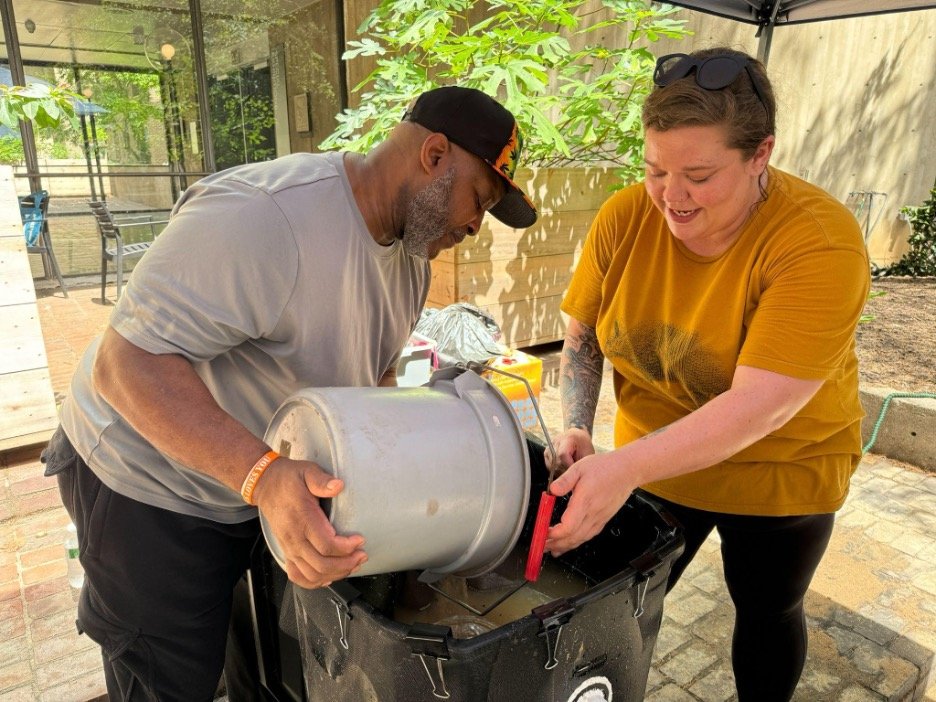
Community member Erik Weaver (left) and Heritage West Research Assistant Chelsea Cohen (right) during a very muddy flotation workshop that took place during Summer 2024.
For plants to be preserved on archaeological sites, they usually need to be burned (carbonized) so they can survive the test of time. However, at younger sites like the CEC site, which dates from the 1880s through the 1960s, not all preserved plants need to be burned. Privy contexts in particular can preserve food remains for a long time because of their unusual conditions. Once we recovered all the plant remains during the flotation workshop, we took them back to the lab for sorting and analysis under the microscope.
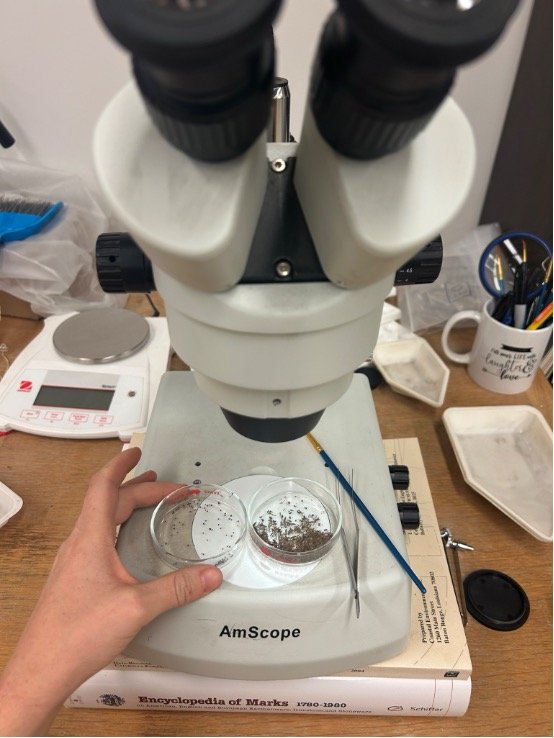
Heritage West Research Assistant, Moriah McKenna, sorting seeds recovered from the CEC site samples under the microscope.
The plant parts that most commonly survive are the hard shells of nuts, pits of fruit, or small seeds. Below are some pictures of the plant remains we found.
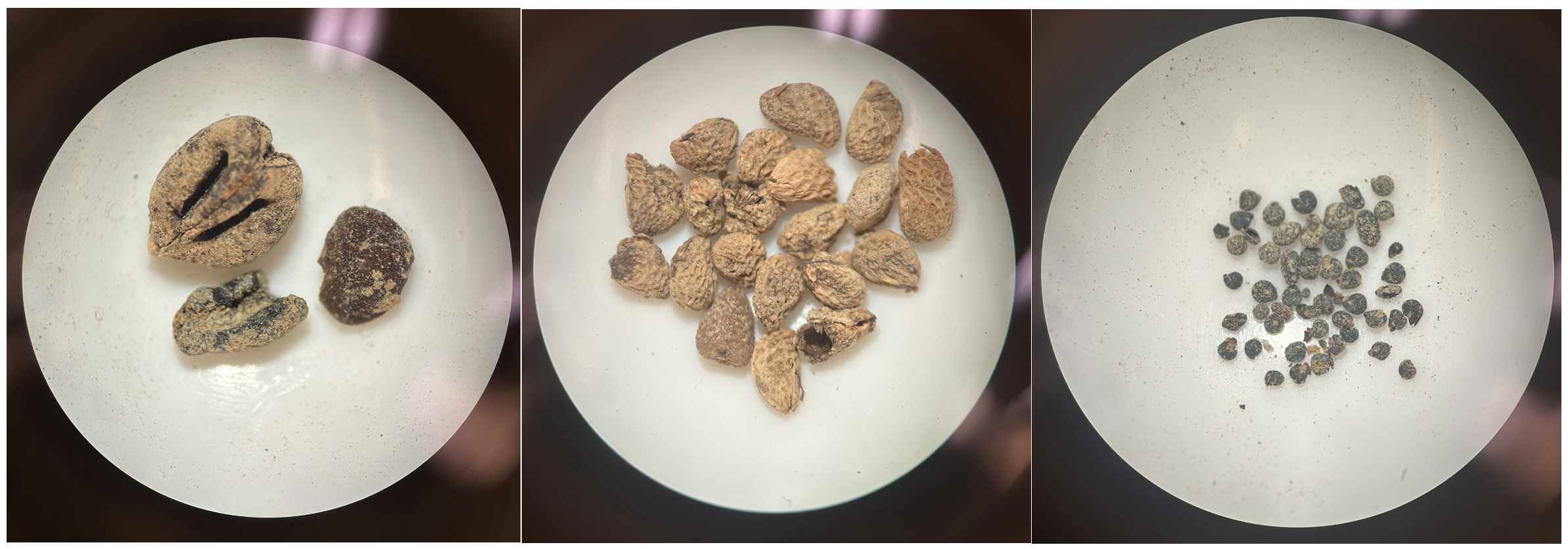
Seeds recovered from the privy excavation, including grape, raspberry or blackberry, and a variety of other food and weedy plants.
We were surprised by how many berry seeds we found! It will take more research to determine if these were wild fruits or if they may have been purchased. It's cool to think that, though these were city people living in the Black Bottom, there may have been a lot of urban foraging and gardening alongside eating foods bought at the market.
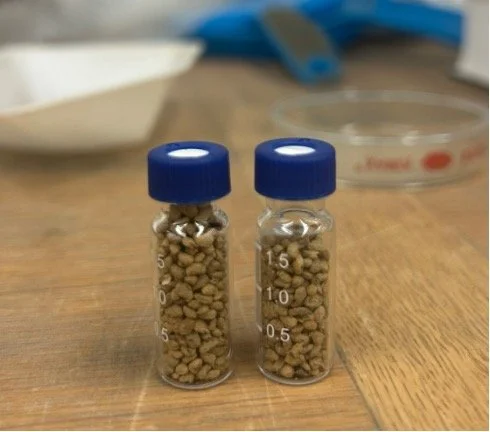
Two vials full of potential berry seeds.
We also have to remember the possibility that there was simply a berry bush growing next to the privy, or that the remains of one were thrown into the privy as people weeded. These could both be explanations for why we see so many seeds here. They may not have been directly eaten or otherwise transported by humans. Not all the seeds we found are from edible plants. Some may just tell us something about what was growing at the time Black Bottom residents were there and can speak to the environment of the time and how the space was kept.
In addition to seeds, flotation samples give us the chance to explore lots of other small artifacts. Some of these, like small animal bones, may still be related to food, or to pests living in the neighborhood. Others, like this small clear bead, may have found their way into the privy accidentally or been thrown away after sweeping the house. We can add these artifacts to the ones we found while excavating to help tell a more complete story of the Black Bottom.
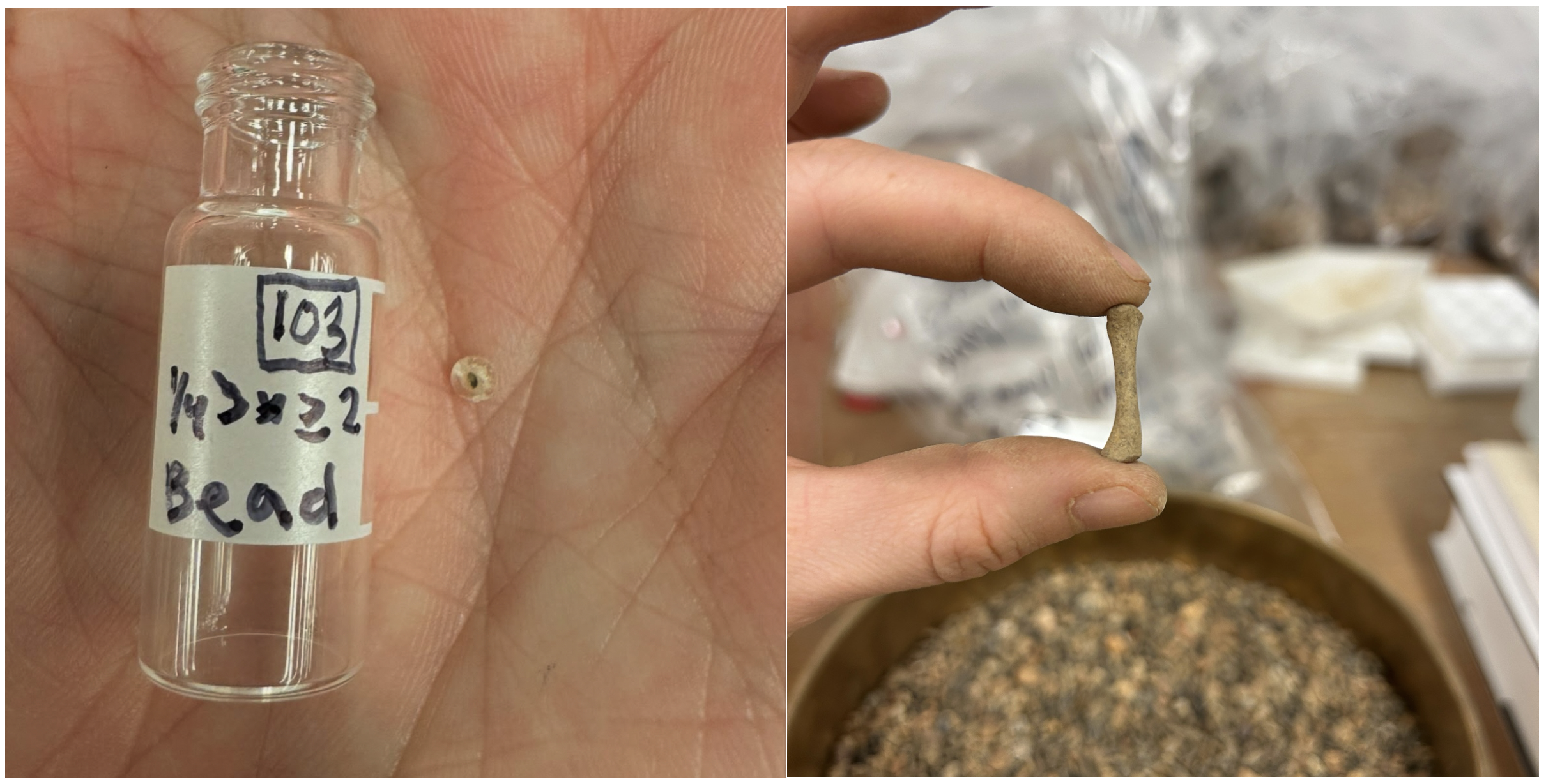
Glass bead and small animal bone found during sorting of material after the samples were processed.
Though sorting of the material after flotation has only just begun, we can see the diverse ways these plant remains speak to life in the Black Bottom. They point to how residents lived in and experienced their neighborhood from the food they ate and where they got it to the environment they experienced and curated. The small seeds recovered through flotation highlight the varied diet of residents when compared with the larger remains of butchered cow bones and oysters we found in other excavation units outside the privy.
We can’t wait to incorporate more material into this story from our upcoming excavations at a new location! Stay tuned for more details about our upcoming Fall 2026 excavation season!