History of the Project
When people think of archaeology they tend to think of faraway places and the distant past. As archaeologists based at the University of Pennsylvania and the Penn Museum, we started Heritage West in 2019 with a desire to highlight local archaeological resources and research questions of interest to people in our own neighborhood.
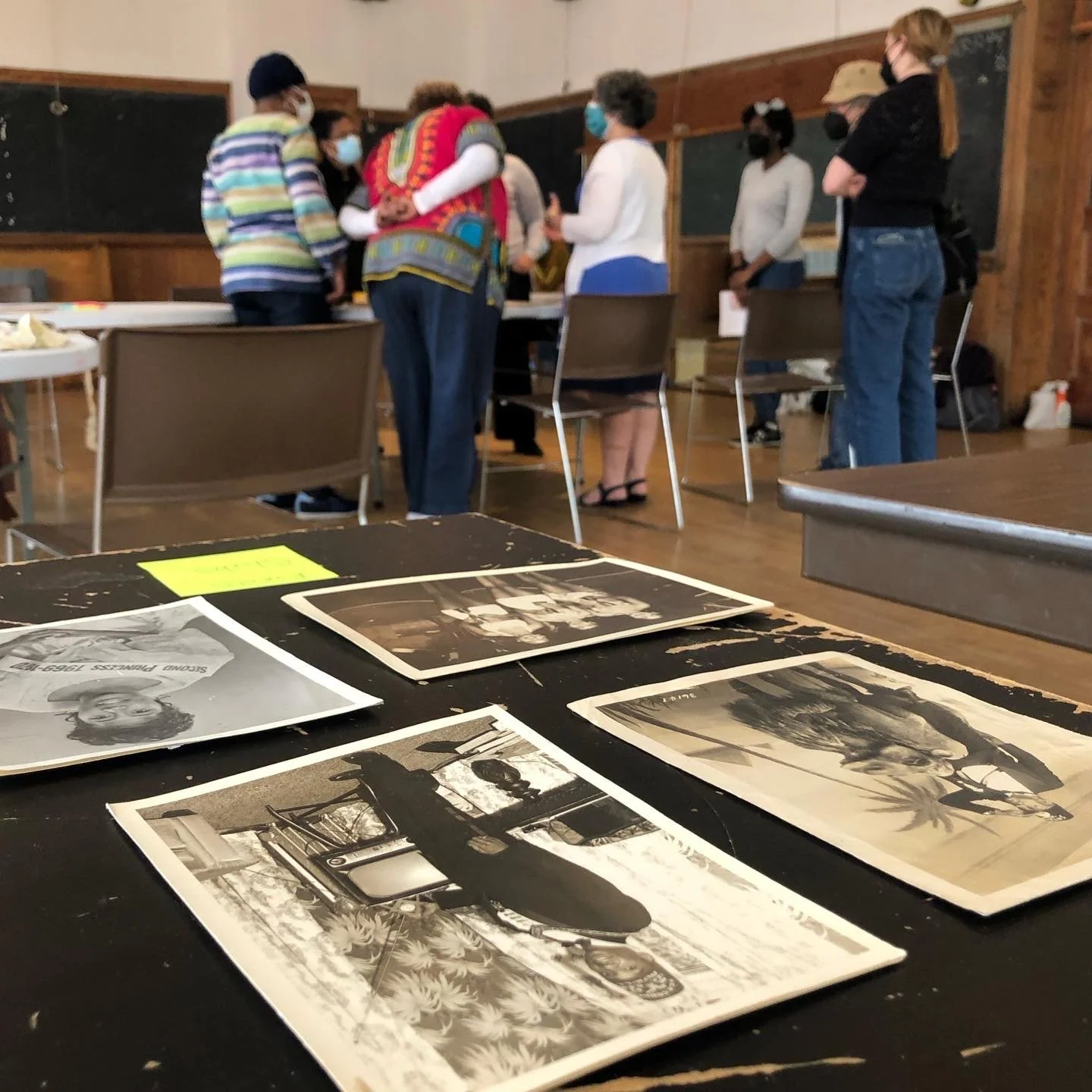
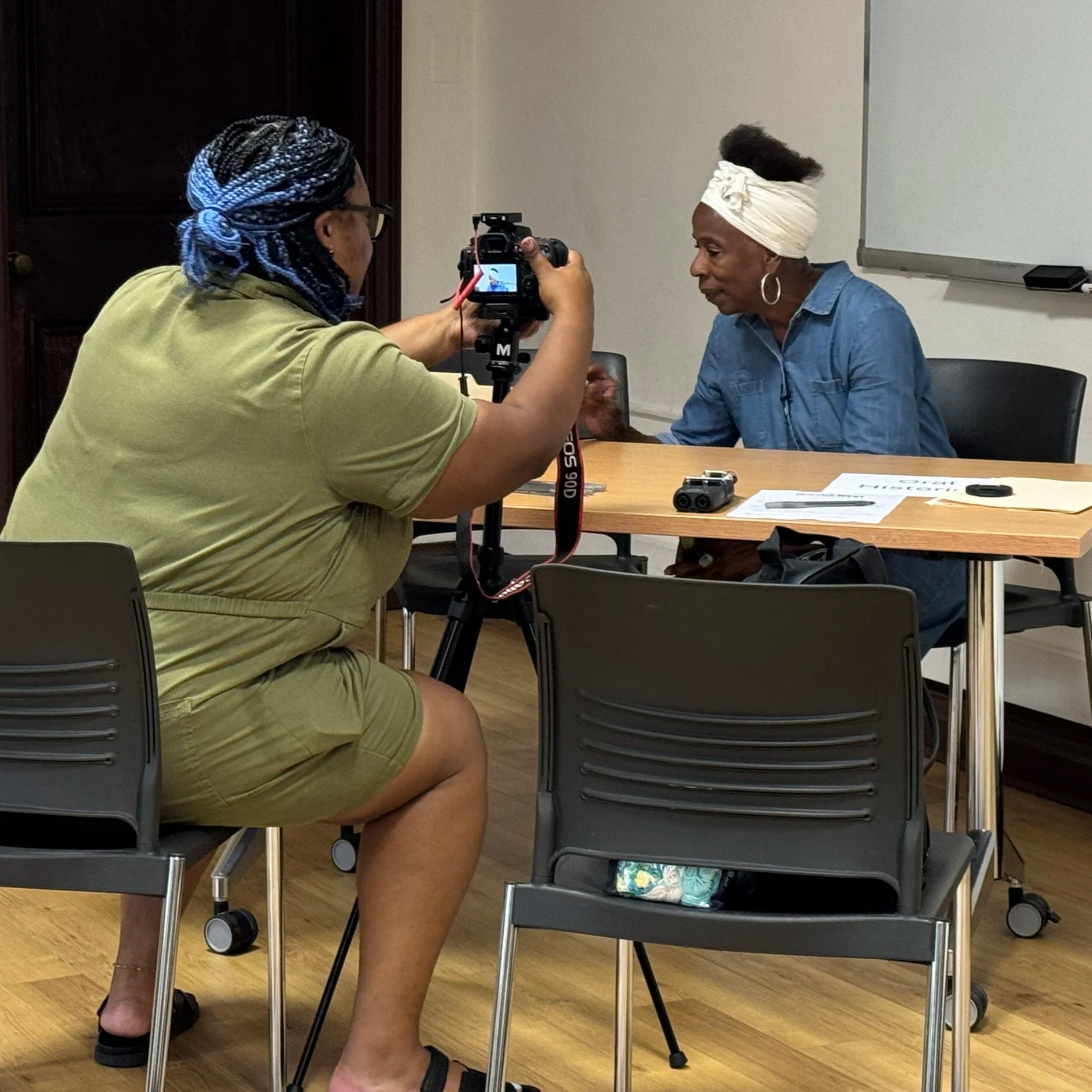
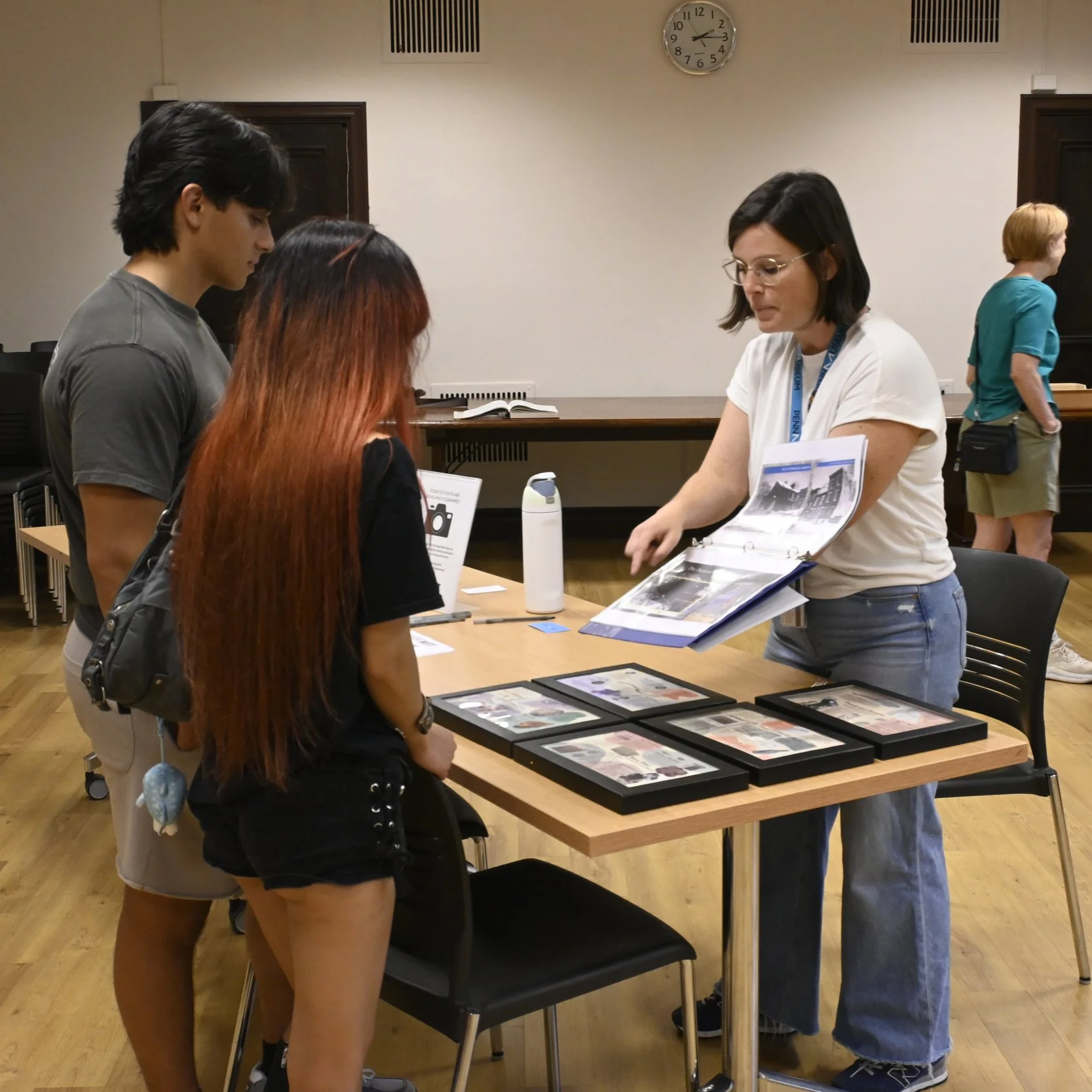
We began by speaking with community organizations like Black Bottom Tribe Association and HopePHL and decided to center the project on the Black Bottom, a once thriving Black community in the area now called University City, which was destroyed in the 1960s under the guise of “urban renewal”. Community input and participation has been part of the project since its outset. We built a collaborative timeline that we set up at public events, allowing people to write down what they knew and remembered about the neighborhood’s history. We talked to community members at public events and ran workshop on topics like genealogy and archiving family histories.
Of course, there are still those who remember the neighborhood as it was in the 1950s and 60s and, during the course of our conversations with these elders, we heard about the annual Christmas light displays on Lancaster Ave., which convenience stores made the best hangouts, and where former banks, delis, and seafood restaurants were once located. Mostly we heard that the neighborhood was far from blighted. It was a tight knit community of people who relied on and took care of one another. We believed that, in combination with oral histories and existing archives, an archaeology project could push the historical narrative of the neighborhood further back in time than living memory and add material weight to the stories of the people who lived here by uncovering artifacts that may inspire further memories.
In 2023, we started the first season of excavation. Having formed a relationship with the Community Education Center (CEC) at 35th Street and Lancaster Avenue, we came to realize that its gravel parking lot was one of very few locations in University City not covered in concrete or topped with a new high-rise building. Archival research showed that the CEC’s back parking lot once held seven homes – three brick row homes facing Warren Street built in the late 1870s and two wooden twin structures facing what was then 35th Street that were built in the 1850s, before West Philadelphia was part of the City of Philadelphia. With generous permission from Ms. Terri Shockley, the Executive Director of the CEC, we began our archaeological research with a geophysical survey to confirm our belief that the remains of these structures still existed underground. You can read about the results of these investigations on our blog.
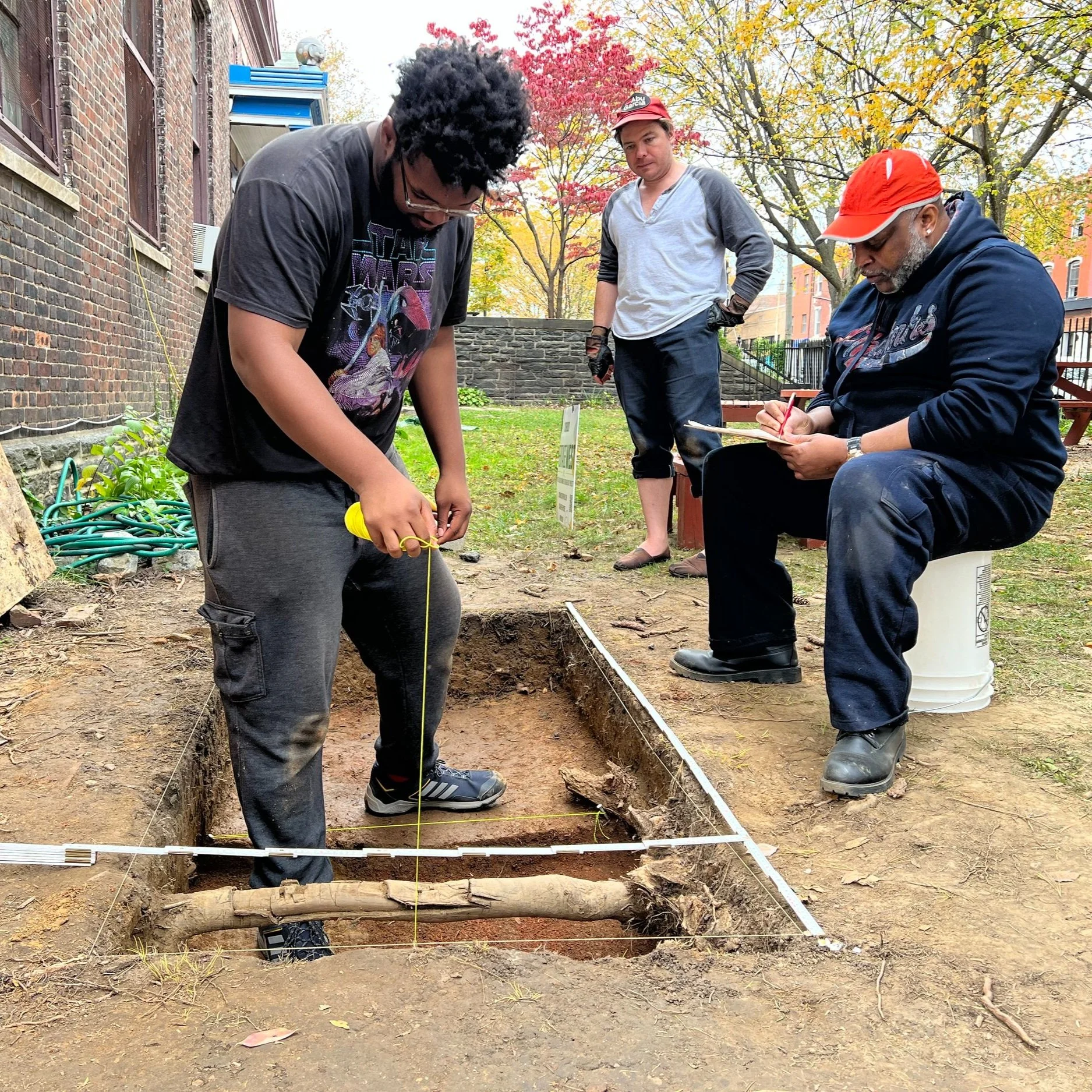
Excavations at the CEC began in the fall with nine undergraduates, who were part of a Penn course called “Digging in the City of Brotherly Love,” and a growing group of community members. A key tenet of Heritage West is democratizing access to archaeological training – both to community members and to students. Archaeological training tends to only be accessible at universities, and even then excavation experience is exclusively available to those who can afford to take summers to travel and participate in (often expensive) field schools. We wanted to offer community members and students a chance to learn excavation methods during the school year and in their own neighborhood. From August through November 2023, we excavated four units. Three were located in the CEC’s parking lot; they considered one of the wooden homes that was destroyed in the 1930s, its outdoor privy (outhouse), and the rubble of the brick homes that were destroyed by bulldozers in the 1960s large-scale demolition of the Black Bottom. A fourth focused on the front yard of the CEC with the goal of better understanding the 175-year-old Quaker building and drawing in passersby on Lancaster Avenue.
Over the course of the semester, the team of 20+ community members, 10+ students, and a small project staff excavated every Friday from 10am to 5pm and ran two Saturday events. We often had visitors dropping in, including former Black Bottom residents wanting to share stories, those living nearby who were curious about the project, and local school groups learning about archaeology and history. We discovered thousands of interesting objects that tell us more about the people who lived in these seven homes, including pieces of personal adornment like a ring with a glass stone and a small bone button, as well as mundane things like broken pottery and animal bones, which tell us how and what people were cooking and eating. We discovered objects dating from the time of the destruction of the Black Bottom in the 1960s to the mid-1800s origins of the neighborhood. You can learn more about our findings on our blog.
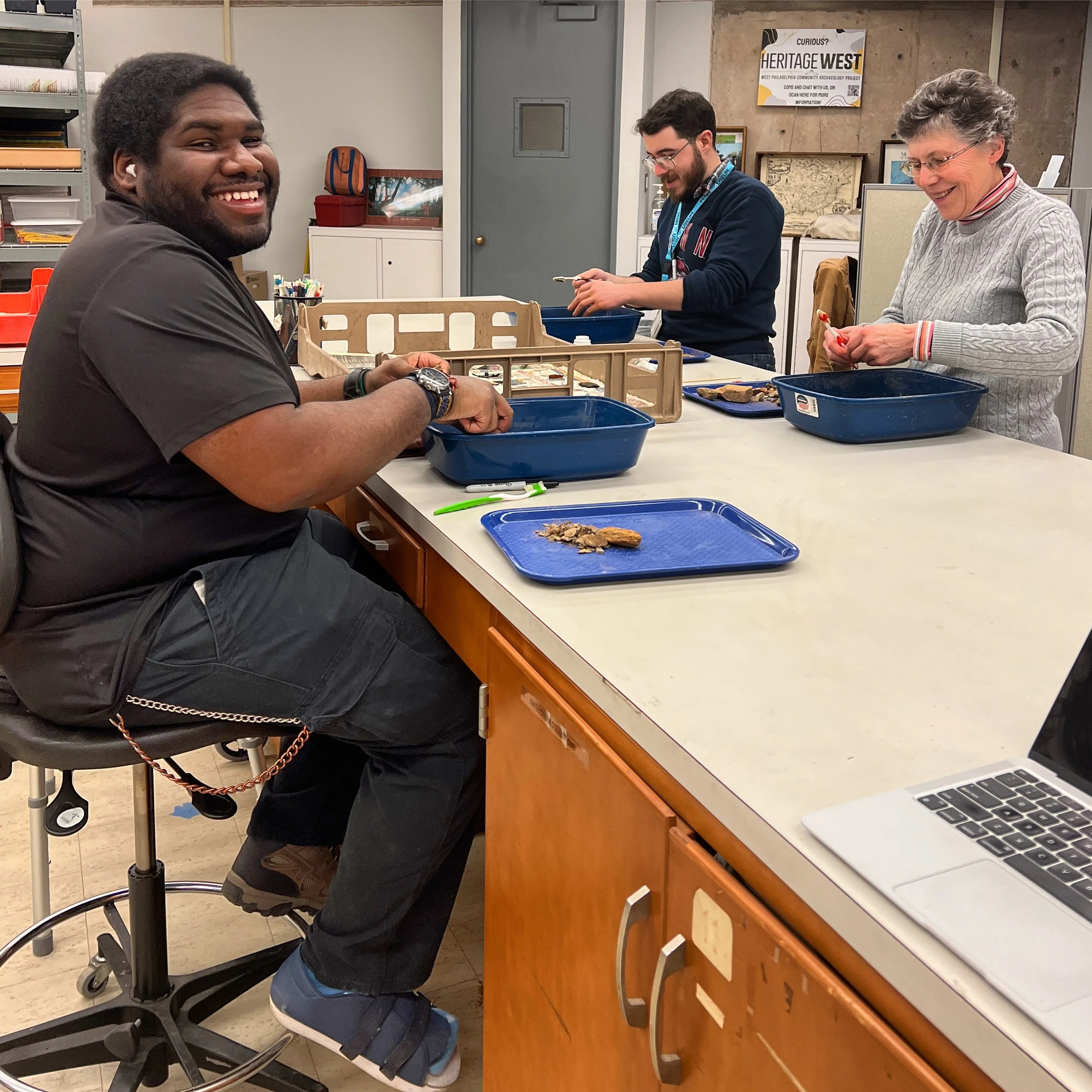
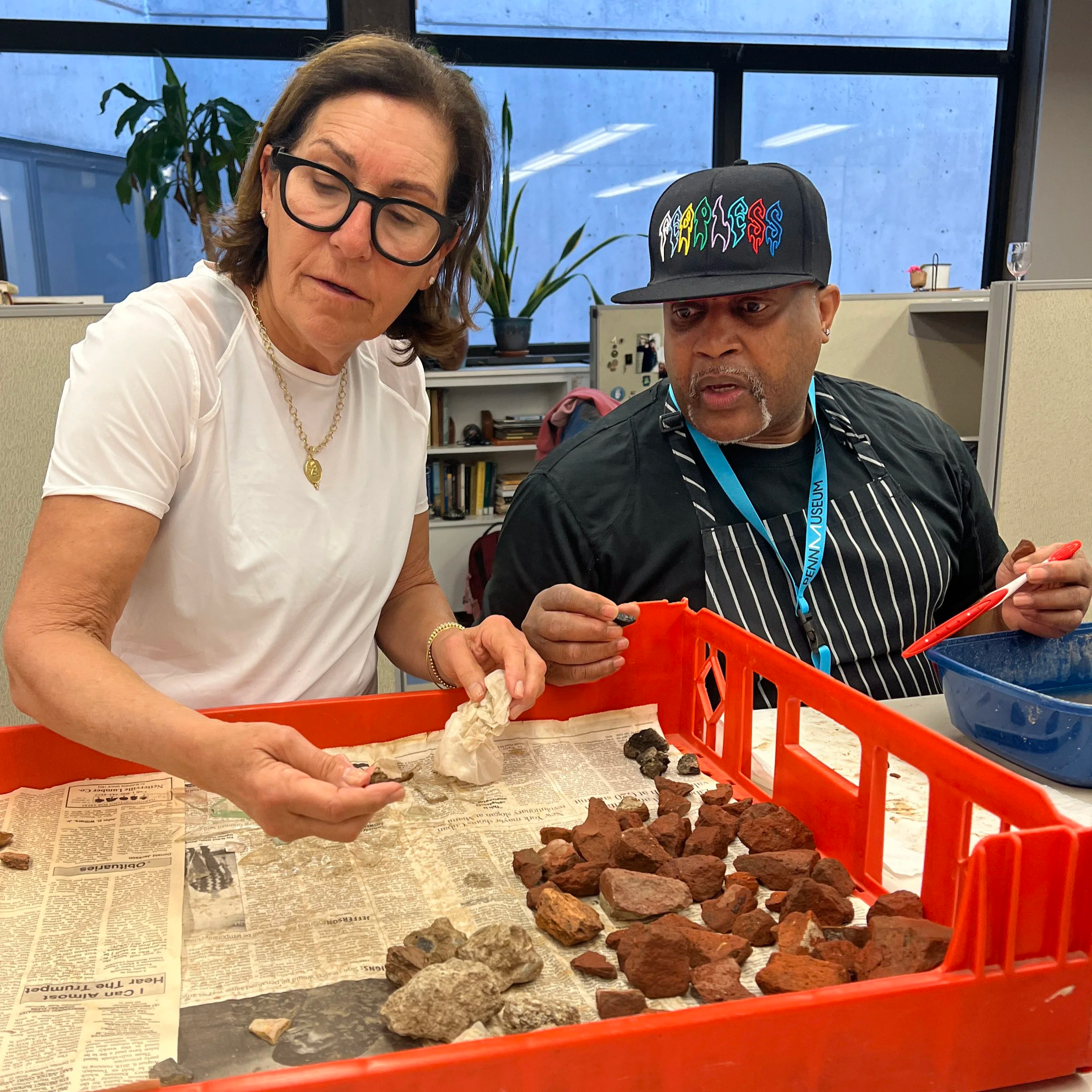
With the excavation units filled back in, we then welcomed community members and students to work with us in the lab to wash, sort, and analyze the objects discovered. We held open lab hours two days per week, during which over 30 dedicated community archaeologists put in over 350 hours of hard work helping us process the excavated collections. Because excavation happens so fast, washing everything is a real process of discovery and we identified many amazing objects that hadn’t attracted our attention in the field. After they were washed, we carefully examined each object and assigned it a category based on material type, function, and what it can tell us about human behavior. We counted and weighed all of these objects to create a full artifact catalog, and all of our community archaeologists added important notes that will guide our future detailed analyses. You can learn more about the lab work on our blog. Detailed analysis of the artifacts continues. Often the analysis and interpretation of archaeological materials takes many years… much, much longer than it takes to excavate them. (You can see an example of what we’ve learned about food on our blog.) While this work is painstaking, it also gives us many opportunities to continue to involve interested community members, which we do through ongoing workshops and public events.
Finally, we have formed and worked closely with an 11-person Community Advisory Group, made up of representatives from our community partners and several of our most dedicated volunteers who have a direct connection to the neighborhood, to discuss next steps for the project. So far, we have held meetings to discuss: (1) where the physical collection should be housed long term and how it should be made accessible digitally to interested members of the public; (2) the potential for exhibition of the material; (3) the development of focused educational initiatives for Philadelphia-area K-12 students; (4) the possibility of some material being made available to an artist to use in creating a memorial of the neighborhood; (5) the desire for collecting object-based oral histories to help interpret our findings; and (6) plans for another excavation. We are pursuing all of these next steps!
Our next excavation season is now underway. We are excavating at the Community Education Center again and also along Lancaster Walk on the campus of Drexel University. We welcome visitors to come see the excavation and chat with us every Friday from 10am-5pm. If you’d like to get involved with any of these initiatives in a deeper way than just a visit, please fill out the form here and we’ll be in touch!